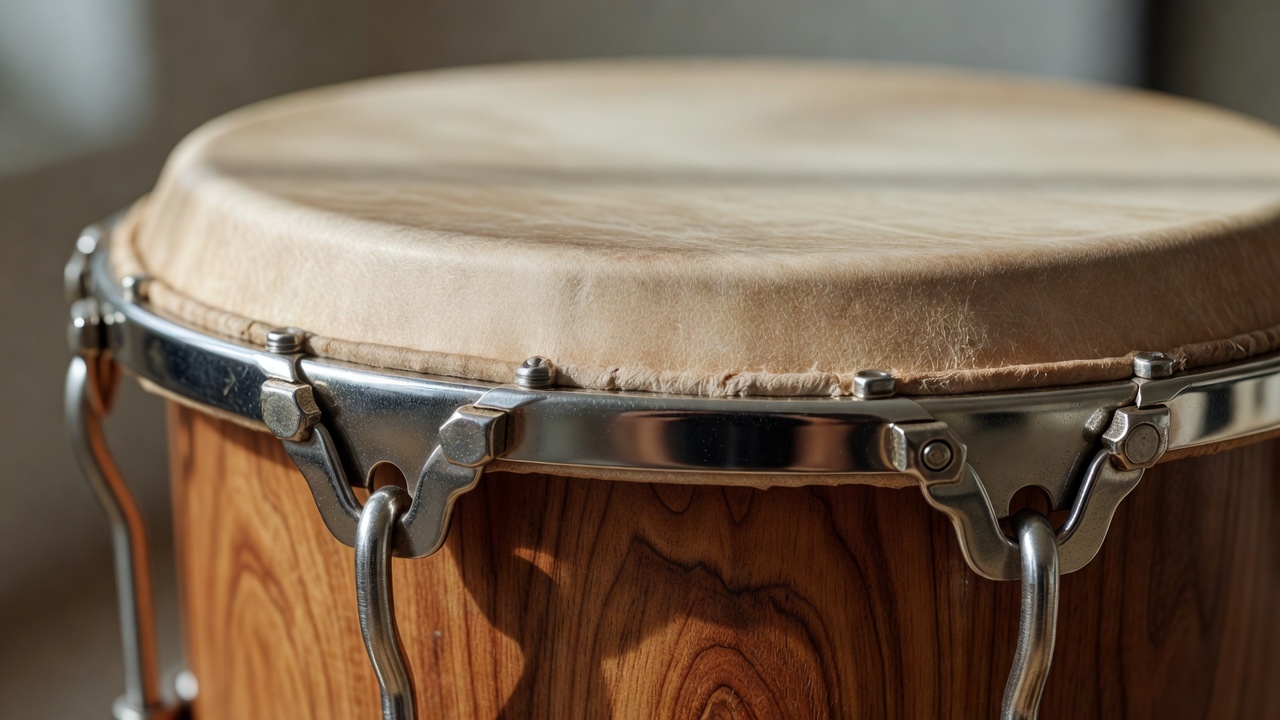
Know what your drum is made from
Start with the maker’s instructions and identify the head material. Natural hide and synthetic heads do not respond identically to weather or cleaning. Shells may be wood, fiberglass or another material, with finishes that also need different care. Advice that suits one model may be unsuitable for another.
Keep a note of the manufacturer, model and head size if you can find them. Replacement heads are not always interchangeable just because the advertised diameter looks similar. The crown shape, mounting system and rim clearance can matter. A percussion shop can help confirm compatibility before you buy.
Check the connecting block and the area around each fitting as well as the visible head. A new rattle may come from loose hardware rather than the playing surface. Do not keep tightening random parts until it disappears; first locate the source with the drum supported and silent.
Keep weather changes gradual
Natural skin absorbs and releases moisture, which can change its tension and tone. A head that sounded clear indoors may feel lower or less responsive in humid garden air. That does not automatically mean the instrument needs a large tuning adjustment. Give it time to settle in a shaded, dry location.
Keep all bongos out of rain, direct sun and damp grass. Synthetic heads may be more stable in humidity, but water can still affect hardware, shells and adhesives. Do not leave drums in a hot vehicle or next to a radiator. Move them indoors before evening condensation forms.
Never use a flame, oven or hair dryer to force a head tighter. Localized heat can damage materials and create uneven stress. If a drum becomes wet, bring it into a dry, ventilated room, gently remove surface moisture where appropriate and consult the manufacturer if the head or shell has been soaked.
Adjust tuning a little at a time
Use the correct wrench and support the instrument securely. Before turning anything, look for a crooked rim, a torn head, a bent fitting or a lug that is already under unusual strain. Stop if you see damage. Tuning is not a repair for broken parts.
For drums with conventional tension lugs, follow the maker’s tightening order. This commonly involves small, even adjustments around the head, often using opposite positions to keep tension balanced. Compare the sound near each lug with gentle taps at a consistent distance from the rim. Listen for an even response rather than chasing a particular pitch by force.
There is no universal number of wrench turns, target note or torque setting that suits every bongo. Keep the smaller drum higher than the larger if that matches the instrument’s intended range, but do not force a large interval. When resistance increases unexpectedly or the rim sits unevenly, stop and ask a knowledgeable technician.
Some makers recommend reducing tension on natural heads after playing; others give model-specific storage advice. Follow that guidance rather than automatically loosening every head after every session.
Clean without adding a new problem
Wash and dry your hands before playing. Afterward, use a soft dry cloth to remove dust and light surface marks from suitable areas. Avoid soaking a head, flooding the rim or spraying products directly onto the instrument. Household cleaners, oils, waxes and skin lotions can leave residues or harm materials.
If the manufacturer permits a slightly damp cloth on a finished shell, use it sparingly and dry the area promptly. Keep moisture away from joints and exposed hardware. Do not assume a product labeled “wood cleaner” is safe for the particular finish on your drums.
Visible corrosion, a persistently sticky finish or a strong musty smell deserves more investigation, not heavier polishing. A qualified repairer can advise on safe cleaning and whether any part needs replacement.
Pack dry and store steadily
The after-session check
- Inspect the head and rim for new damage.
- Remove dust with a suitable soft cloth.
- Let the instrument and case dry fully before closing them.
- Secure small accessories so they cannot strike the head in transit.
- Store away from direct sunlight, damp floors and heaters.
A padded case helps with knocks, but it is not waterproof unless specifically designed and rated for that purpose. Lift the instrument securely rather than carrying it by a single tension fitting. Keep heavy objects off the case and avoid leaving it where somebody might sit on it.
Before the next session, make a few quiet notes and listen for changes. A small difference in sound is often simply the room or weather. Persistent buzzing, slipping hardware or a damaged head calls for attention before more playing. Sensible care makes it easier to return to the part that matters: a comfortable repeatable groove.