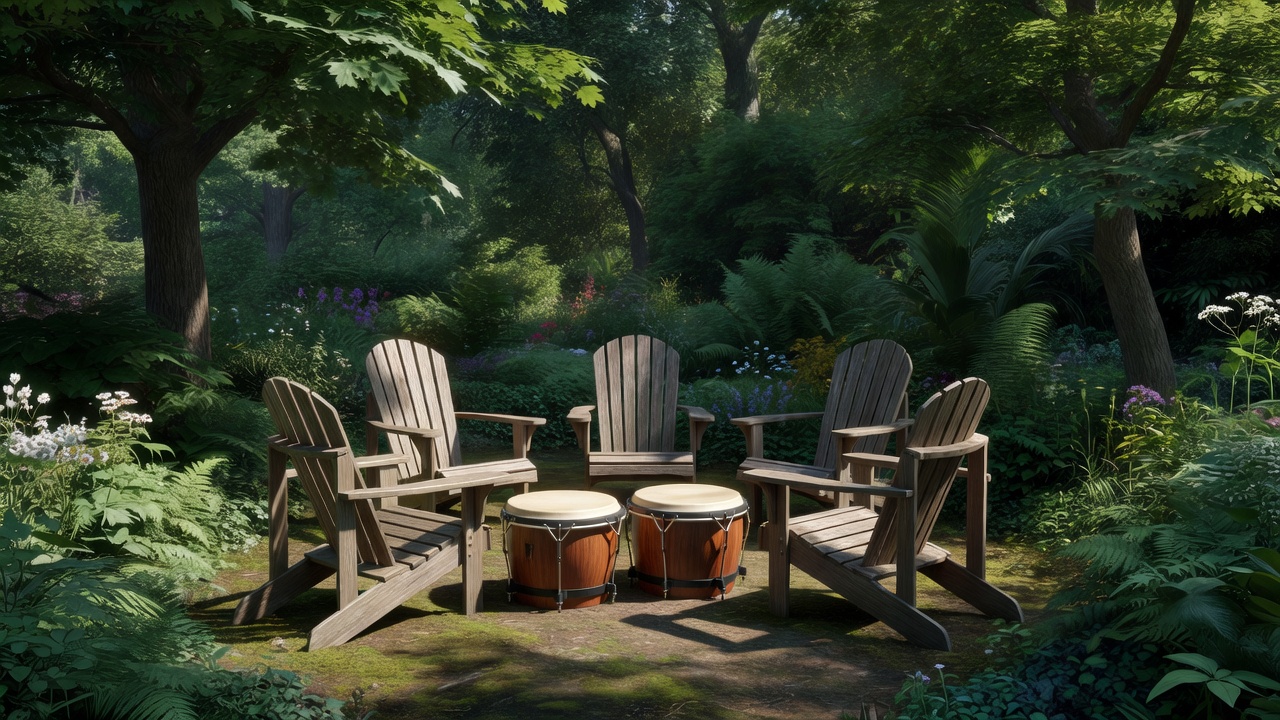
Make the invitation clear and modest
Begin with a few people rather than a large open invitation. Tell guests that no musical experience is required, listening counts as taking part and the first rhythms will be deliberately simple. Give a clear start and finish time, explain whether instruments are available and say what happens if the weather changes.
Ask about access needs in advance without expecting anyone to disclose personal details. Mention steps, uneven paths, bathroom access and the kind of seating available. A visitor who knows what to expect can decide comfortably whether the gathering suits them. Avoid describing a space as accessible unless you have checked what that means in practice.
Offer a quieter place away from the circle. Some people enjoy joining for a few minutes and then listening at a distance. Nobody needs to explain why they want a break, and nobody should be pressured into taking a solo.
Treat sound as part of the location
Check local noise rules, any permit requirements and the conditions attached to your garden, shared courtyard or rented space. Private property does not automatically make loud outdoor sound acceptable. Speak with nearby neighbors beforehand, describe the likely duration and give them an easy way to ask you to lower the volume or stop.
Choose a daytime slot where appropriate, keep the circle away from neighboring windows and avoid amplification for a first gathering. Sound can carry unexpectedly across fences, walls and open ground. A hedge is not reliable soundproofing. Step outside the circle occasionally to hear what the session sounds like farther away.
If people need to raise their voices to speak nearby, reduce the playing level or pause. This is a practical cue, not a measurement of safe hearing exposure. Avoid prolonged loud playing, offer hearing protection when appropriate and stop if anyone reports ringing, discomfort or sound sensitivity.
Prepare the space before people arrive
Seating, weather and instrument checklist
- Use stable chairs on firm, level ground and keep walking routes clear.
- Leave enough elbow room between players and space for mobility aids.
- Provide shade and drinking water; keep drinks away from drumheads.
- Check for slippery paving, low branches, cables and garden tools.
- Keep cases nearby so drums can move indoors promptly.
- Agree on a dry alternative or cancel if the weather makes the space unsafe.
- Check shared instruments for loose parts, sharp edges or damaged heads.
Do not leave drums warming in direct sun while you arrange chairs. Evening sessions need particular attention because condensation can arrive before obvious rain. If thunder is heard, stop and move people to a suitable substantial shelter; a tree or open gazebo is not a safe lightning shelter.
Give the first round a simple shape
Welcome everyone without a long lesson. Demonstrate one gentle tone, then count four even beats together. Let people speak or clap the pulse before adding drums. Invite one person to hold a simple part while another joins quietly. Add players gradually so the group can still hear where the beat sits.
A gentle session outline
- Settle in and agree on volume, breaks and a stop cue.
- Speak the pulse together without instruments.
- Play the starter groove for a few loops.
- Pause, listen to comments and switch roles if people want to.
- Finish on time and help return instruments to their cases.
Use plain invitations such as “join when you are ready” and “let us try that more quietly.” Avoid pointing out mistakes in front of the group. If the timing becomes tangled, stop together, smile and rebuild the pulse without assigning blame.
Make sharing instruments genuinely optional
Ask before touching someone else’s drum or changing its tuning. Provide a clean, dry cloth for the instrument owner to use according to the manufacturer’s guidance. Do not spray disinfectant onto a natural skin or wooden shell. Encourage hand washing and drying before playing, especially after food or gardening.
Children need suitable supervision, appropriately sized instruments and freedom to step away from loud sound. Keep small detachable parts out of reach. Pets may also find percussion stressful, so arrange a separate comfortable area rather than assuming they will enjoy the circle.
Ask permission before taking photographs or recording. Explain where any recording would be shared and respect a refusal without discussion. The invitation is to make rhythm together, not automatically to appear in somebody’s social feed.
End while the welcome still feels warm
Give advance notice of the final round and use the agreed stop cue. Leave a moment of quiet before the conversation begins again. Thank people for listening as well as playing, check that the garden is clear and bring instruments inside before dampness settles.
Afterwards, ask one small question: “What would make the next session more comfortable?” An earlier finish, fewer instruments or a quieter pattern may help more than a longer playlist. A successful first gathering is one that people and neighbors would both be comfortable repeating.